
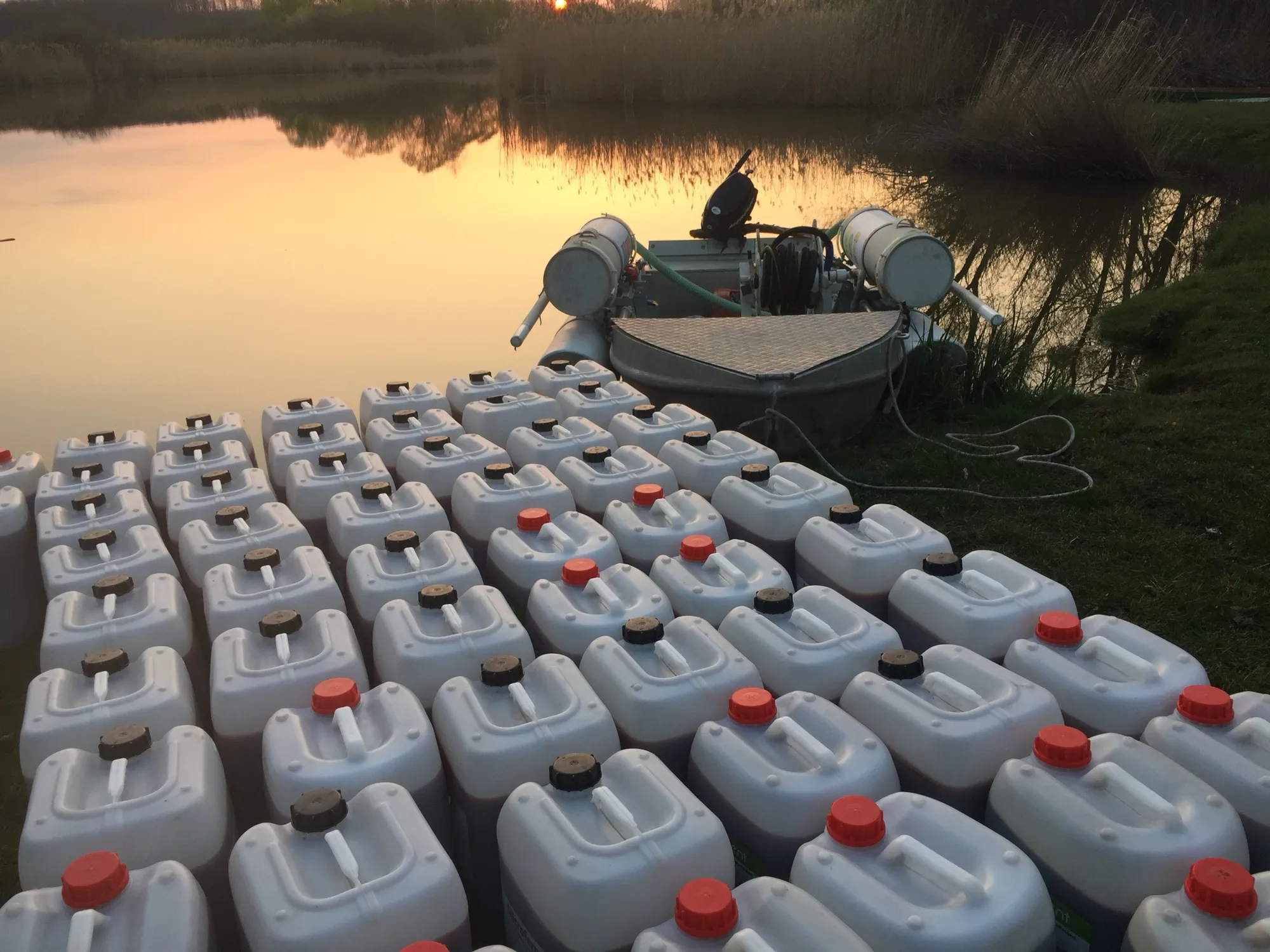
Sludge reduction by bacteria, not by dredger.
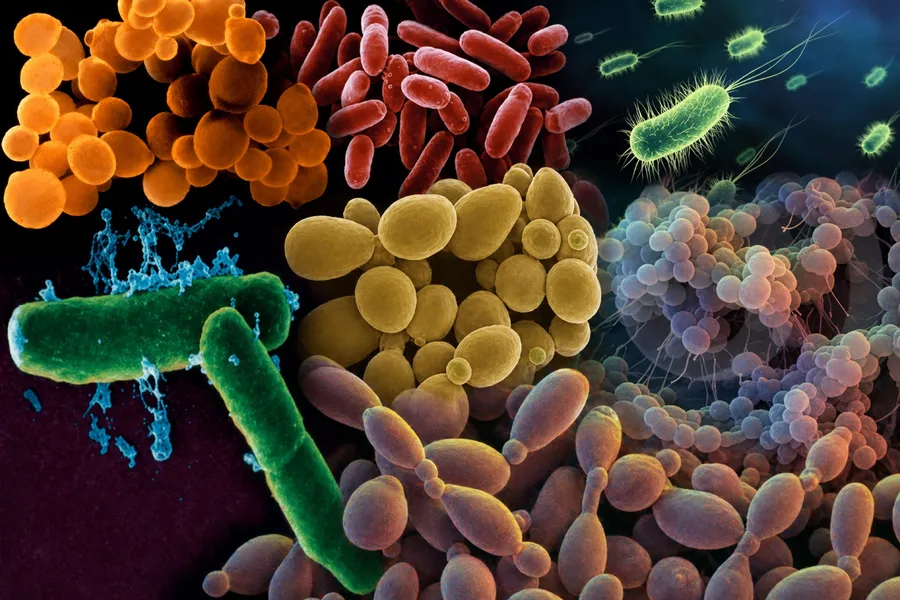
We accelerate natural microbiological processes with targeted strains — in lakes, cooling reservoirs, industrial settling tanks and manure stores. The sludge breaks down on site; nothing has to be hauled away.
The problem
Organic sludge is the silent killer of lakes, settling tanks and process basins. It eats useful volume, drives oxygen depletion, triggers eutrophication, generates odour, and sooner or later forces a technical intervention. The conventional answer is dredging: expensive, noisy, disruptive to the ecosystem — and it treats only the symptom, not the cause.
Our approach
We apply site-specific bacterial strains and supporting nutrients to the water body. They speed up the natural breakdown of organic matter, cut sludge thickness, lower hydrogen-sulphide and ammonia emissions, and restore the water’s lost self-cleaning capacity. The method does not disturb fish stocks, needs no water exchange, and the effects are measurable within 4–8 weeks.
Process
Diagnosis
Water sample, sludge sample, oxygen and ammonia readings. We establish whether the problem can genuinely be solved biologically — and if it cannot, we say so.
Agent selection
From the diagnosis we choose a bacterial mix. Lake, manure store, industrial settling tank — a different formula for each case.
Application
Liquid or granular dosing — by hand, from a boat or via a dosing rig, depending on the site.
Activation
A 2–4 week adaptation phase during which the bacterial community colonises the sludge surface.
Measurement
Results are documented by measurement: repeat sludge-thickness readings, water-quality parameters, and odour analysis where relevant.
Maintenance
In most cases 2–4 maintenance doses per year keep the effect going. Under a service contract the client is supported continuously, not project by project.
Who it is for
- Urban ornamental basins, park lakes and small lakes
- Production and recreational fish ponds (without disturbing the stock)
- Power and industrial cooling reservoirs, process settling tanks
- Agricultural manure stores and pig-farm lagoons
- Pre-settling basins in food industry (dairies, abattoirs)
- Sewer sections and pumping stations — odour control
- Improving irrigation-water quality
Let’s talk about your specific project.
You will hear back within one working day. Email only — no phone follow-up.